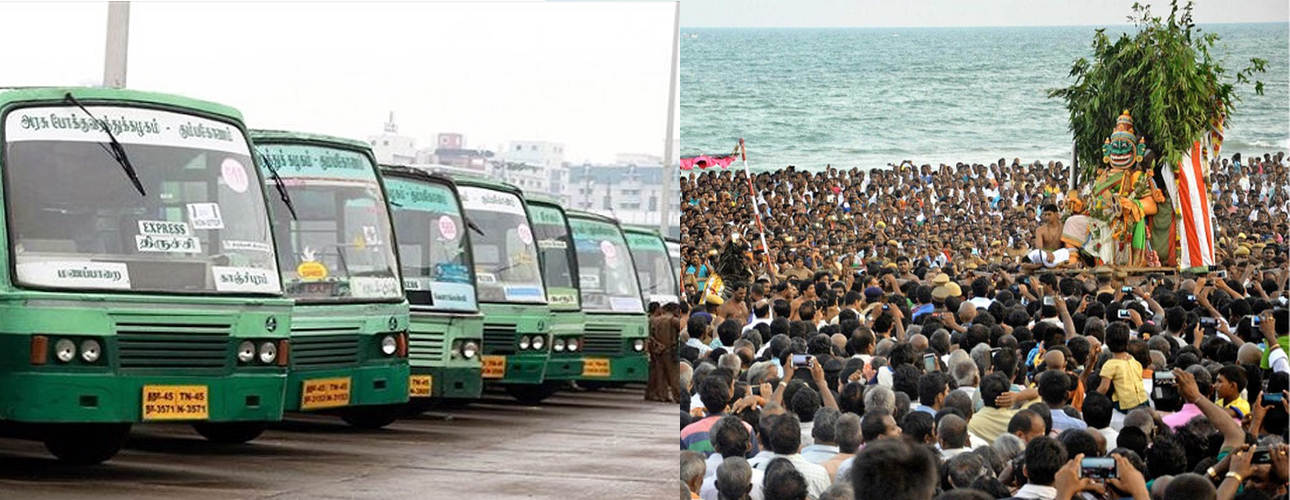



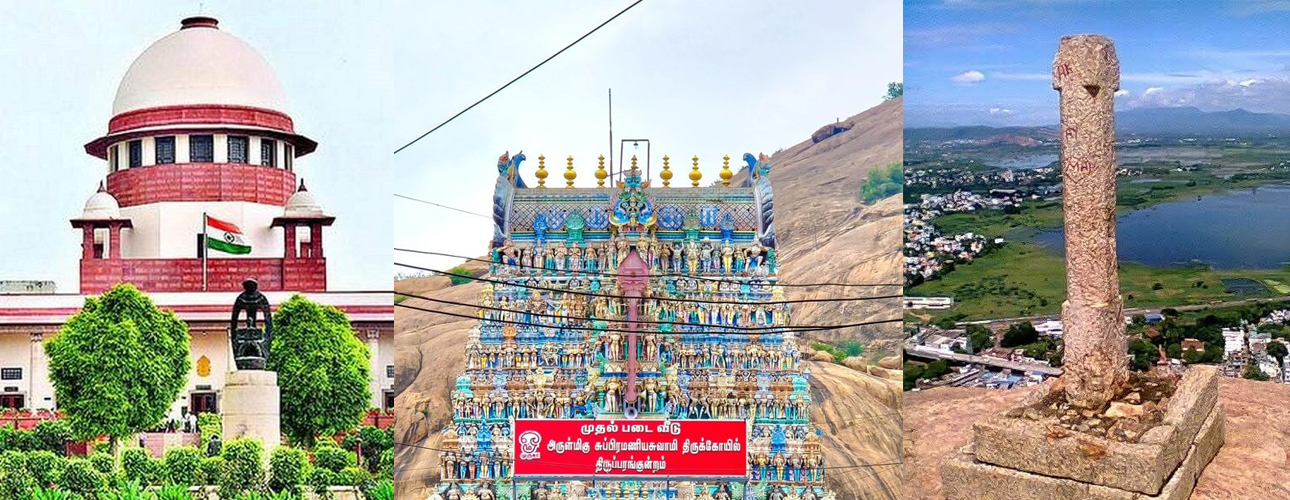
The Supreme Court has permitted the lighting of the Karthigai Deepam at the Deepathoon atop Thiruparankundram hill in Madurai on November 24, 2026, as a one-time interim arrangement. However, the court has imposed strict conditions, including a ban on public access to the lamp-lighting location. Only authorised representatives selected by the temple administration and necessary government officials will be allowed to reach the site. A bench comprising Justices Aravind Kumar and Vipul M. Pancholi passed the order while considering the ongoing dispute over the ritual.
One-Time Permission with Strict Restrictions
The court has allowed the ceremonial lamp to be lit at the stone pillar identified as the Deepathoon on November 24. The permission is limited to this year’s Karthigai Deepam festival and does not establish any permanent right to conduct the ceremony at the location.
Key conditions laid down by the Supreme Court:
- The lamp may be lit only once, on November 24, 2026.
- Only authorised temple representatives and necessary government officials may access the site.
- Members of the general public will not be permitted to enter the lamp-lighting location.
- Processions, public gatherings, demonstrations and slogan-raising are prohibited.
- The District Collector will decide the team’s composition and size in consultation with the concerned authorities.
Background of the Legal Dispute
The dispute dates back to the 2025 Karthigai Deepam festival, when Madras High Court Madurai Bench single judge Justice G.R. Swaminathan directed that the lamp be lit at the Deepathoon atop Thiruparankundram hill. The Tamil Nadu government challenged the order before a division bench. On January 6, 2026, the division bench upheld the relevant directions, following which the State approached the Supreme Court.
Arguments were presented before the Supreme Court by representatives of the State government, temple administration and the Dargah side. While considering the matter, the Supreme Court stayed the relevant directions and findings in the Madras High Court’s January 6, 2026 judgment, insofar as they concern the issues under challenge in the present proceedings.
District Collector to Coordinate Security and Arrangements
The Madurai District Collector has been designated as the nodal officer for coordinating the ceremony. The timing, access route and duration of the event will be determined by the district administration in consultation with the Temple Executive Officer, the Archaeological Survey of India and the Madurai Commissioner of Police.
The Archaeological Survey of India will prescribe safeguards to protect the site’s heritage features and surrounding areas. No new construction, excavation, permanent installation or structural alteration will be permitted. The court has also directed that worship activities at the Dargah and mosque, as well as lawful access to those places, must not be disturbed.
The authorised team must leave the location immediately after the ceremony. The District Collector is required to submit a compliance report to the Supreme Court within three days after the festival.
No Permanent Religious or Customary Right Recognised
The Supreme Court has specifically clarified that its one-time permission does not recognise or establish any customary, religious or proprietary right over the Deepathoon or the hill. The permission cannot be cited as a precedent for seeking similar arrangements in future years.
Questions relating to ownership, possession, usage, religious entitlement and access to the site have been left open for final adjudication. The next hearing in the matter is scheduled for the second week of January 2027.
Thus, the November 24 ceremony will take place only under the temporary arrangement and safeguards prescribed by the Supreme Court, without determining the broader legal dispute.