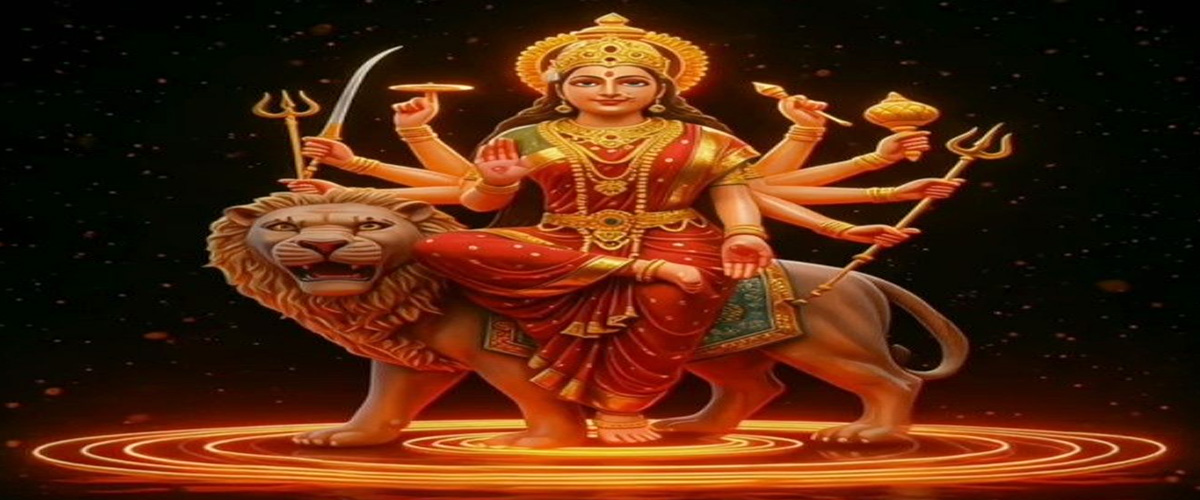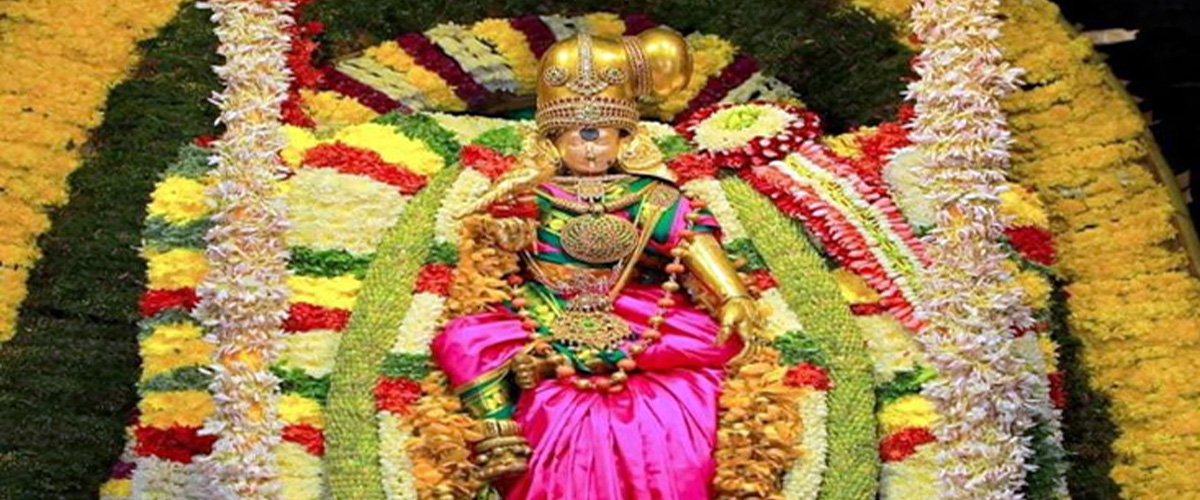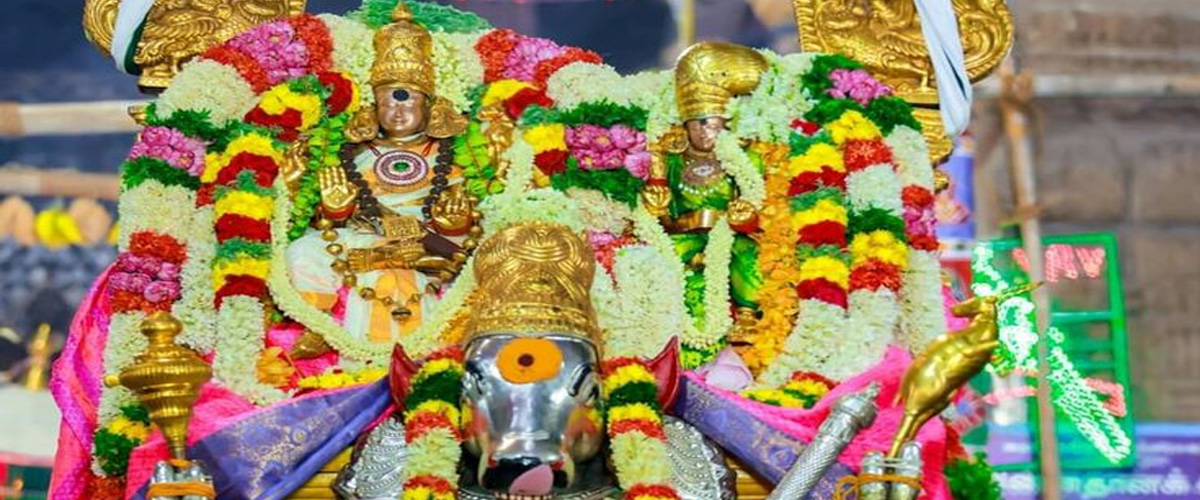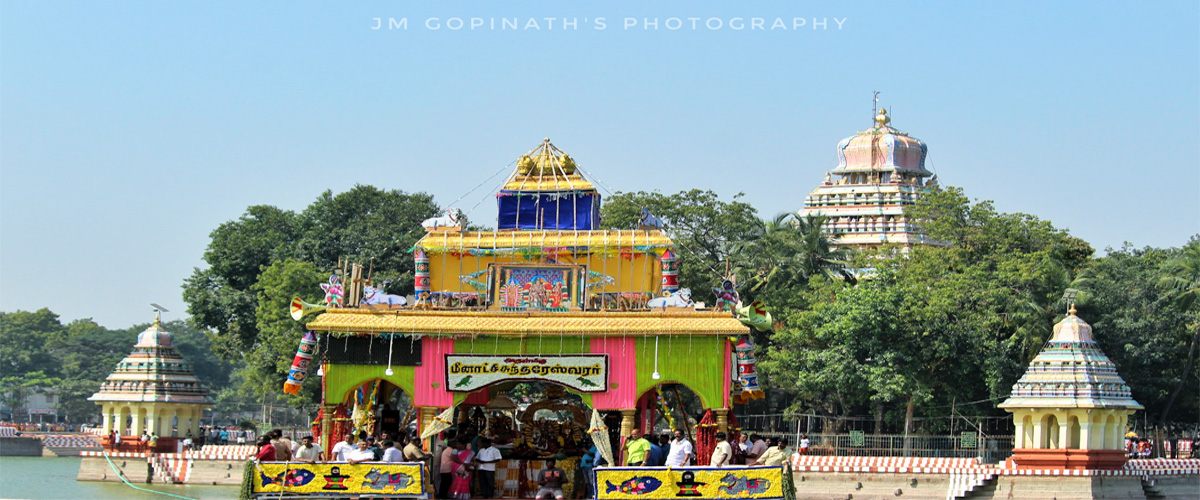
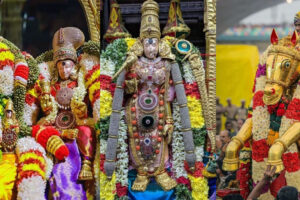

King Malayadhwaja Pandya and Queen Kanchanamala were deeply saddened by their inability to have children. As a result, they worshipped Lord Shiva, praying for a child. Through the grace of Lord Shiva, Meenakshi was born from the sacred fire during a yajna (sacrificial ritual) conducted in the yagasala. Because of her divine emergence, she was also known as “Angayar Kannī” (the virgin born of fire).
At birth, Meenakshi was said to have three breasts. It was prophesied that the third breast would disappear when she met the one destined to be her husband. Upon seeing Lord Shiva on Mount Kailash, the central third breast vanished. Realizing this, Meenakshi fell in love with Lord Shiva. Later, Lord Shiva too accepted her love and married her in the form of Sundareswarar.
The idol (sacred form) of Goddess Meenakshi is believed to be made of emerald stone (maragatha kall). The temple structure is said to have been designed by Indra, the king of the gods, and constructed by Kulasekara Pandyan. In this temple, worship is first offered to Meenakshi Amman, followed by worship to Sundareswarar.
During the reign of King Thirumalai Nayakkar, who ruled Madurai, the Kallazhagar Vaibhavam, in which Lord Kallazhagar enters the river, became a grand celebration during the Tamil month of Chithirai. Kallazhagar first entered the river at Thenur, a place near Cholavandan in Madurai, where he is said to have relieved the curse of Sage Tavalai Munivar – an important part of the historical legend.
During the Pandya dynasty, it is said that the Meenakshi Kalyanam (divine wedding) and the coronation (Pattabhishekam) took place in different months. The Meenakshi Thirukalyanam was celebrated in the month of Thai (January–February), while the Pattabhishekam and chariot festival (Therottam) were celebrated in the month of Maasi (February–March).
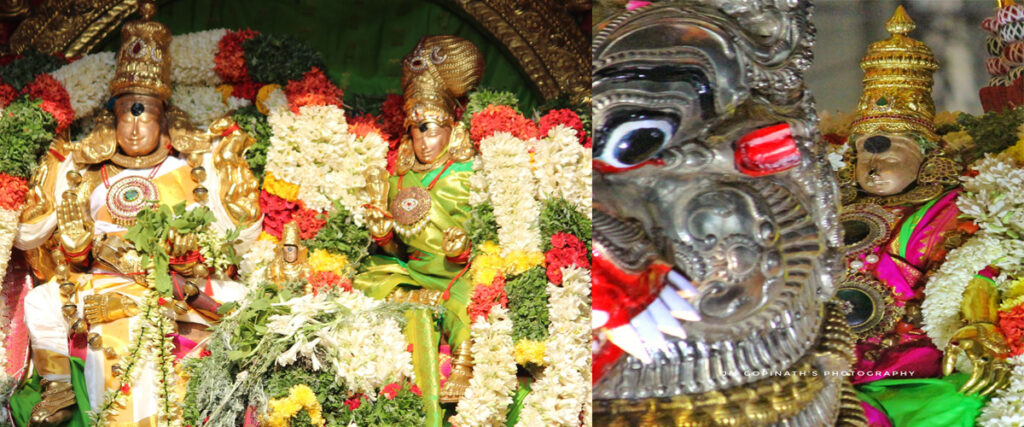
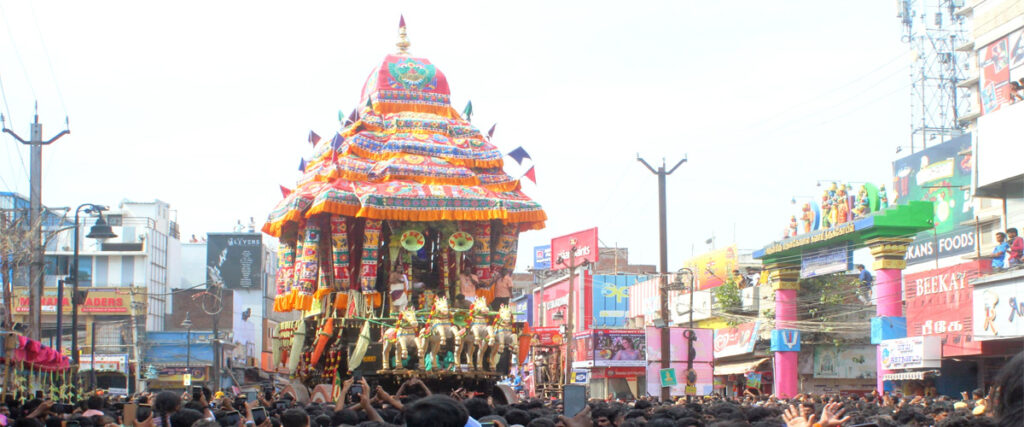
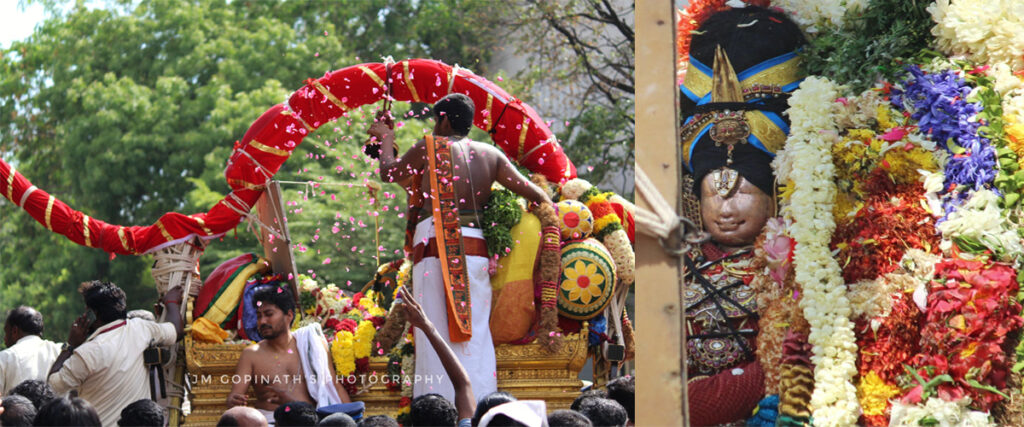
The Shaivites celebrated the Meenakshi Thirukalyanam (divine wedding of Meenakshi), while the Vaishnavites celebrated the Kallazhagar’s descent into the river (Vaibhavam) with equal fervor.
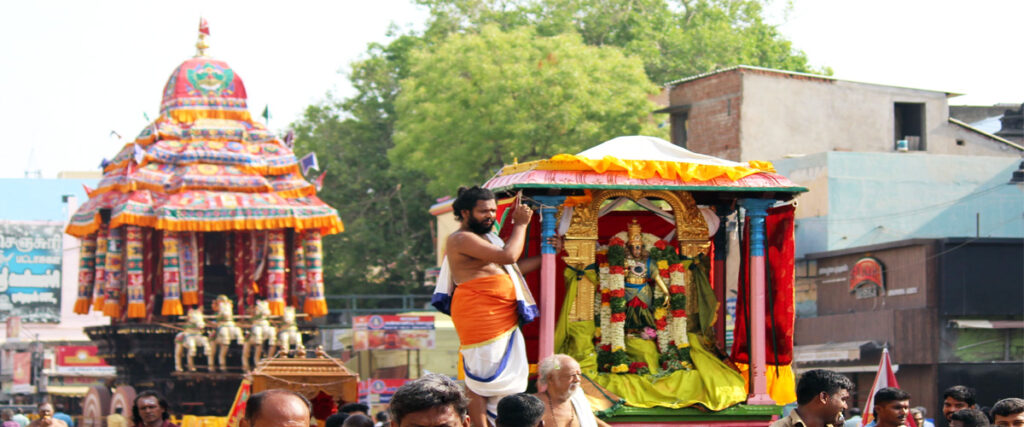
Although King Thirumalai Nayakkar was a follower of the Vaishnavite tradition, he had immense devotion towards Goddess Meenakshi. He contributed greatly to the development of Madurai, initiating many renovations and improvements. He also donated a large temple chariot (ther) for the festival. However, as pulling the massive chariot was difficult, people from neighboring towns and villages were invited to help.
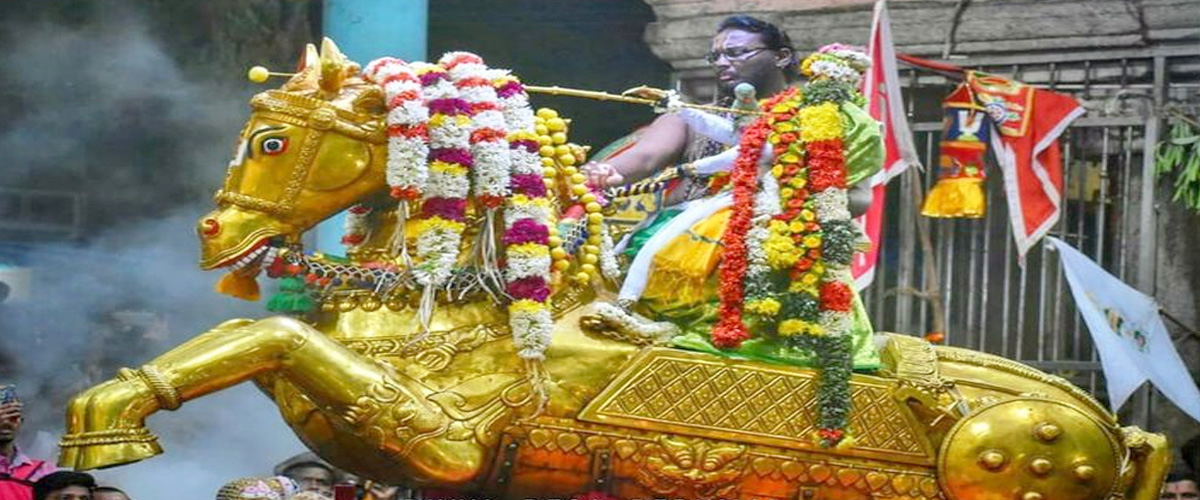
King Thirumalai Nayakkar combined the Meenakshi Thirukalyanam, Pattabhishekam (coronation), chariot festival (Therottam), and the Kallazhagar Vaibhavam into a grand celebration known as the Chithirai Festival. Through this, he created a way to bring people together, transcending religious divisions and promoting unity among the masses.