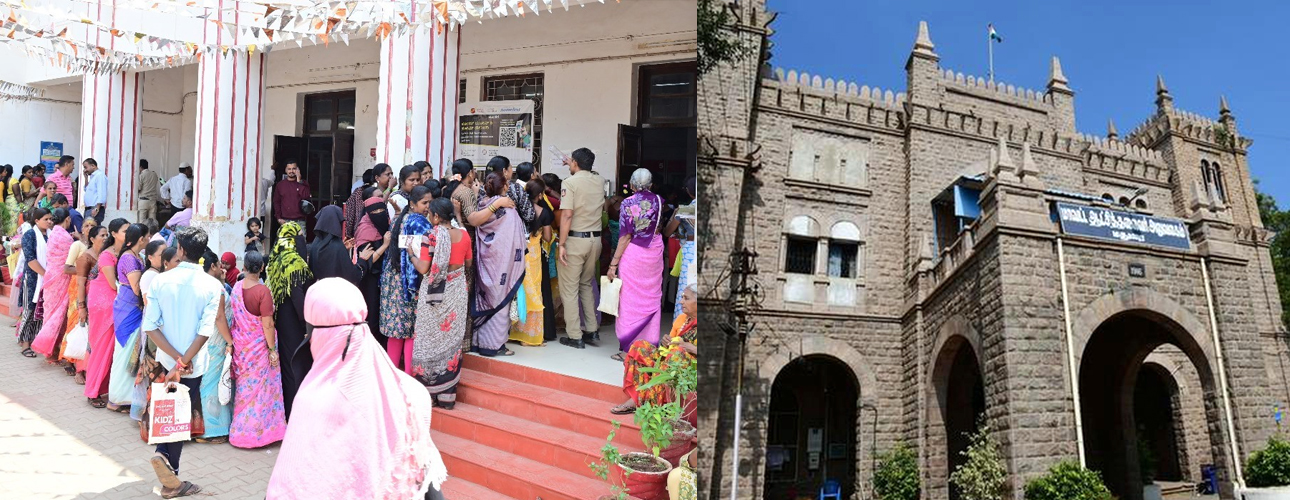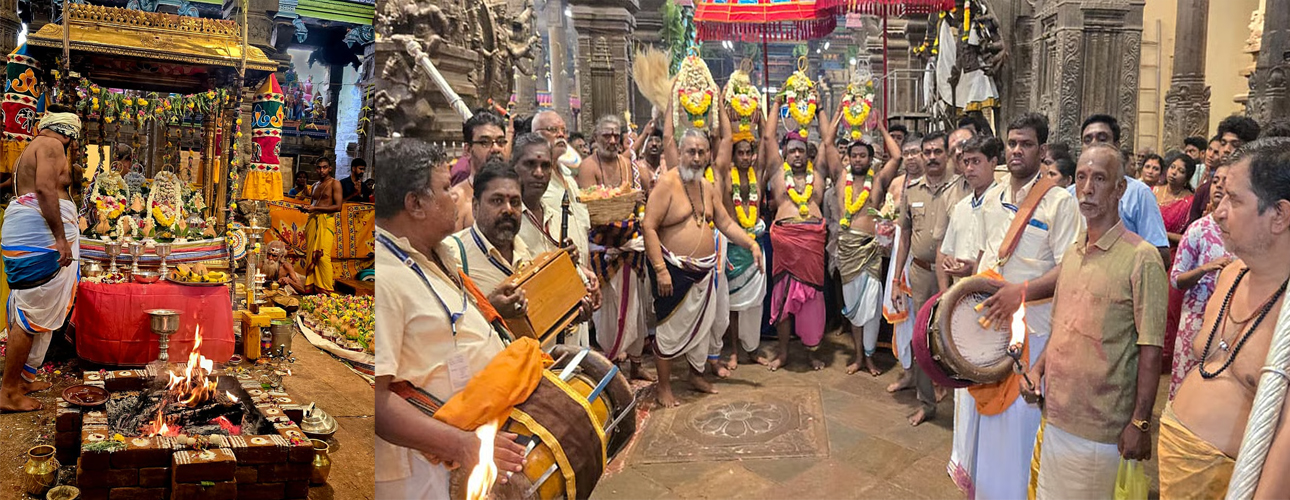








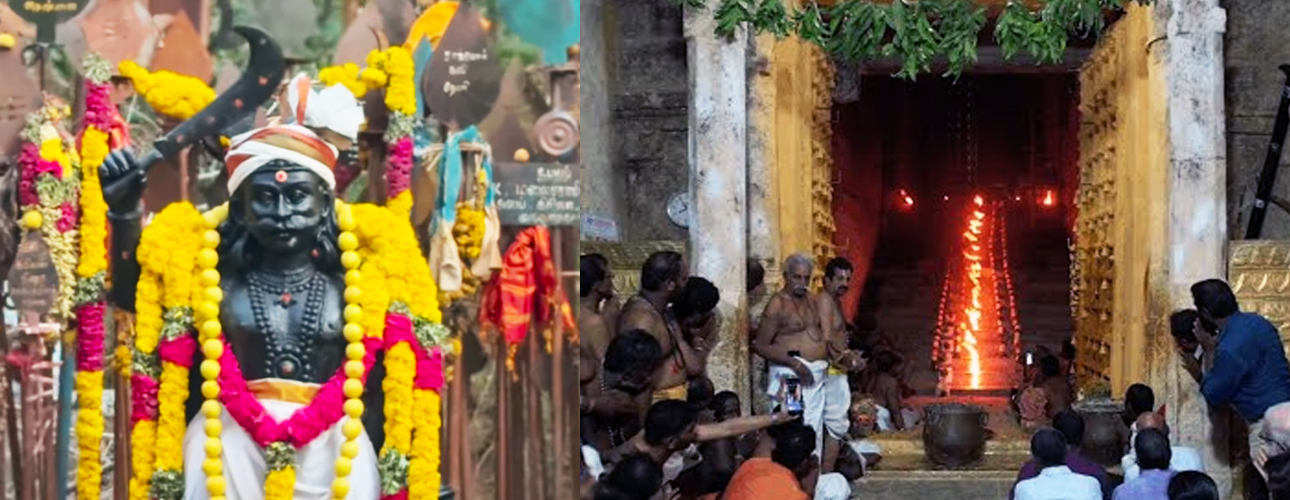
The 18-Step Karuppasamy shrine located in front of the Sundararaja Perumal Temple at Azhagar Temple near Madurai remains closed throughout the year, making it one of the temple’s most distinctive traditions. The shrine’s large wooden doors are opened only once annually on the night of Aadi Pournami, when special rituals are performed for the sacred 18 steps inside. This year’s ceremony is scheduled for July 29, and thousands of devotees are expected to witness the rare event. Throughout the rest of the year, worship is offered directly to the closed doors with sandal paste, garlands, ceremonial clothing, lamps, and daily rituals.
Key Ritual Highlights
Sundararaja Perumal Temple, 18-Step Karuppasamy Shrine, Azhagar Hills, Madurai
Annual Aadi Pournami ceremony, five-minute public viewing, special worship for all 18 steps, Chakrathazhwar procession
Temple legend, guardian deity tradition, devotees’ vows and offerings, continuation of ancient customs
Chithirai festival ornament verification, permission ritual before Kallazhagar’s procession, year-round closure of the shrine entrance, heavy devotee participation
According to temple tradition, the shrine’s origin is linked to a legend involving 18 sorcerers believed to have arrived from Kerala in search of hidden temple treasures. Karuppasamy, who accompanied them as their guardian, is said to have become a devoted follower of Sundararaja Perumal. After the deity revealed their presence, Karuppasamy defeated the sorcerers and they were buried at the temple entrance. Temple lore states that the location later became the symbolic 18 sacred steps, leading to the permanent closure of the original entrance out of religious reverence.
The tradition continues even today, with the temple using a side entrance for daily access. During the famous Chithirai festival, the ornaments worn by Kallazhagar are ceremonially accounted for before the 18-Step Karuppasamy shrine both before departure and after returning to the temple, reinforcing the shrine’s enduring role as the temple’s guardian according to long-standing temple customs.