











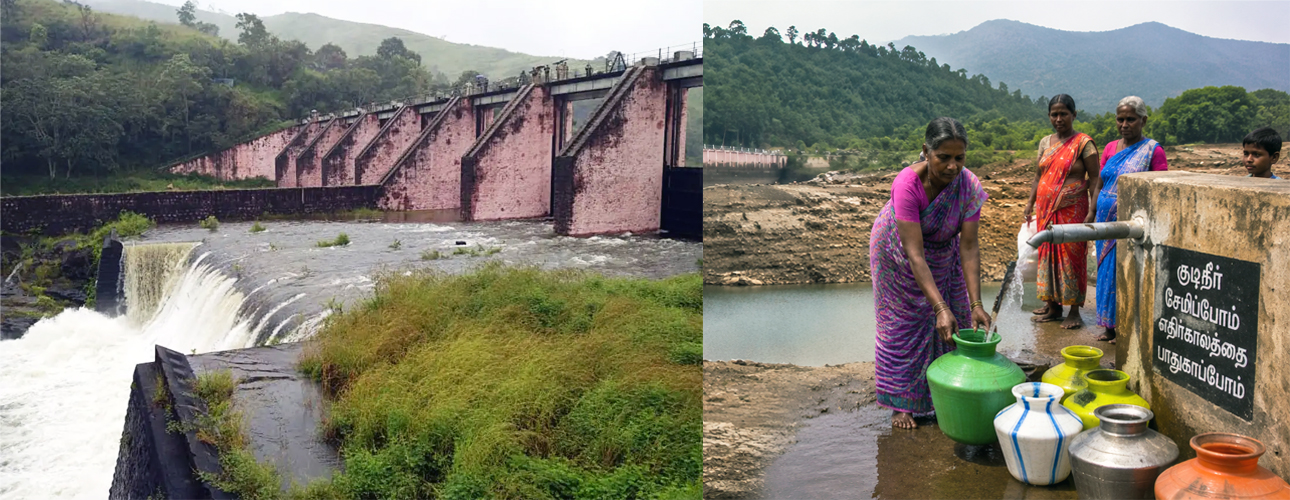
Severe drought conditions in the catchment areas of the Mullaperiyar Dam in Kerala’s Idukki district have raised concerns over water availability for five key districts of Tamil Nadu—Theni, Madurai, Dindigul, Sivaganga and Ramanathapuram. The dam, which serves as a crucial source of irrigation and drinking water, has recorded significantly reduced storage levels due to inadequate rainfall. With inflows remaining low, concerns are mounting over the sustainability of water supplies during the coming months.
The Mullaperiyar Dam plays a vital role in supporting agriculture and domestic water requirements across southern Tamil Nadu. Water released from the reservoir normally flows through the Cumbum Valley into the Vaigai Dam system and is distributed through the Periyar Main Canal, PTR Canal and the Eighteenth Canal network, benefiting vast stretches of agricultural land and numerous rural communities.
Water Status and Developments
Government of Tamil Nadu, Government of Kerala, farmer associations, Supreme Court of India
Potential water shortages in Theni, Madurai, Dindigul, Sivaganga and Ramanathapuram districts, irrigation uncertainty, concerns over drinking water availability
Deficient rainfall in catchment regions, reduced inflows into the reservoir, restrictions under the Rule Curve policy, growing demands from farmers
Dam capacity of 155 feet with current storage below 111 feet, Supreme Court approval for storage up to 142 feet, pending Baby Dam strengthening works, renewed demand for raising the level to 152 feet
The century-old Mullaperiyar Dam has been at the center of long-standing discussions regarding water storage and safety. The Supreme Court had permitted Tamil Nadu to store water up to 142 feet and later allowed plans to raise the level to 152 feet after strengthening the Baby Dam. However, following the devastating floods experienced in Kerala in 2018, the state implemented the Rule Curve system, under which storage at 142 feet is generally permitted only between November and May.
Amid the current drought situation, farmers have renewed demands for policy revisions to improve long-term water security for Tamil Nadu. They have urged the state government to engage with Kerala authorities to expedite Baby Dam strengthening works and facilitate an increase in the reservoir’s storage capacity.
Representatives of farmer organizations have stated that coordinated discussions between both state governments are essential to ensure sustainable water management and safeguard future irrigation and drinking water needs.