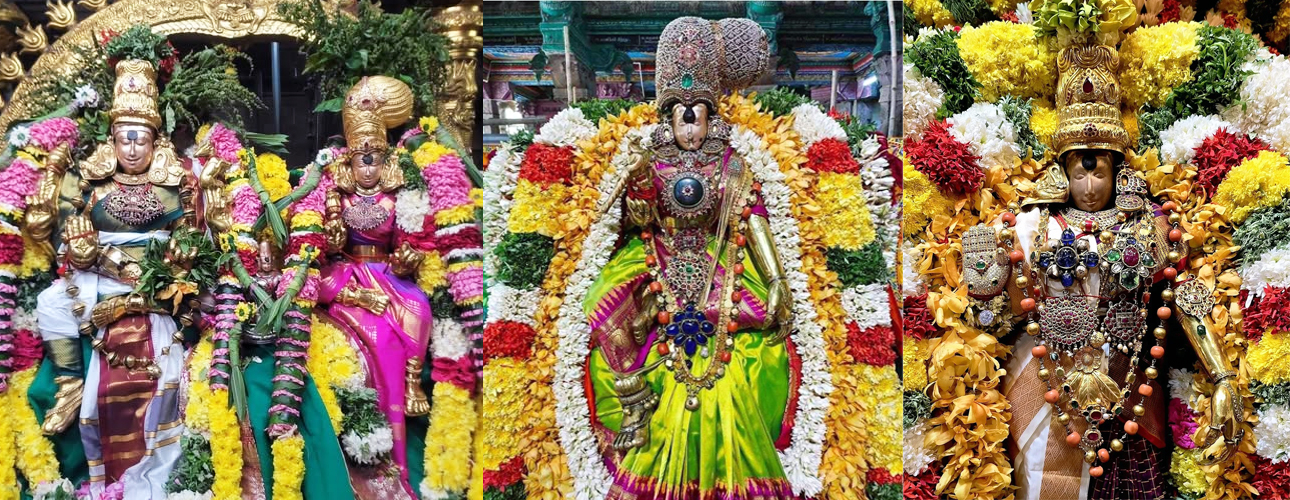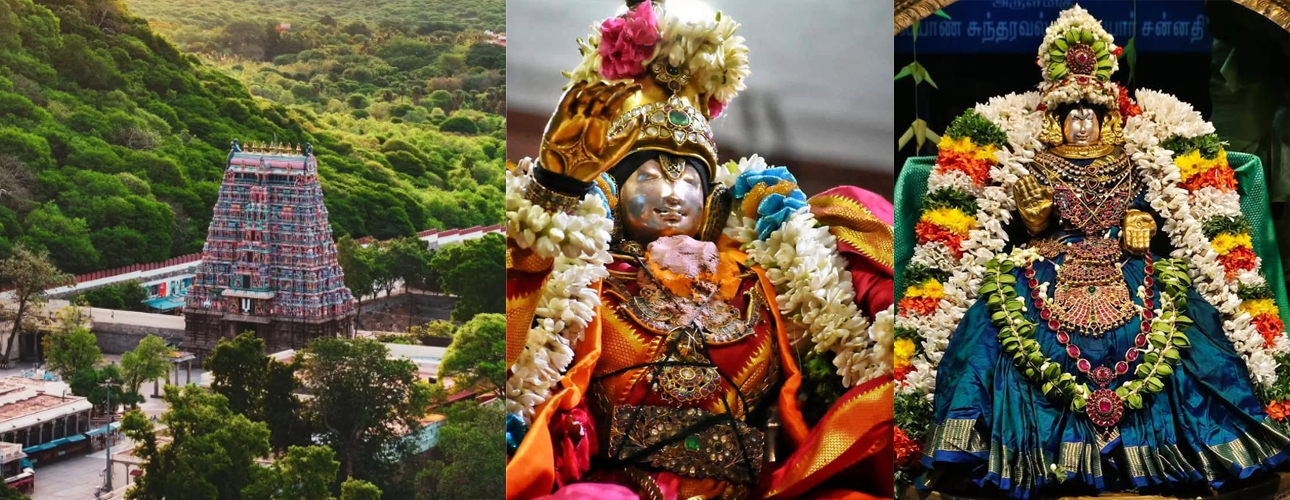


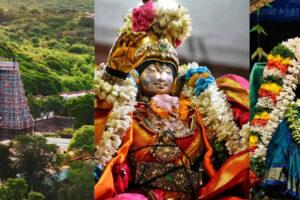
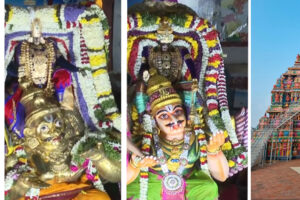
Koodal Azhagar Temple in the heart of Madurai is described as a more than 2,000-year-old Vaishnavite shrine and the 47th among the 108 Divya Desams, with the rare distinction of presenting Lord Vishnu in standing, seated and reclining forms within the same temple complex.
The presiding deity is Koodal Azhagar, also known as Viyuga Nathar, while Sundararajan is the processional deity and Madhuravalli and Maragathavalli are the associated goddesses.
The temple is noted for its approximately 125-foot-high Ashtanga Vimana, ancient sculptures, distinctive worship traditions, major festivals and its association with the origin of the sacred Thiruppallandu hymn.
Architectural and Spiritual Highlights
Koodal Azhagar, Sundararajan, Madhuravalli, Maragathavalli, Periyazhwar
Three sacred forms of Vishnu, approximately 125-foot Ashtanga Vimana, Hemapushkarani, mythological sculptures
Vaikasi Brahmotsavam, chariot festival, float festival, Vaikuntha Ekadashi, Thiruvonam worship
Pandya-era origins, later Vijayanagara and Madurai Nayak expansion, references in classical Tamil literature, separate Navagraha shrine
The name Koodal is associated with the ancient name of Madurai and is explained as referring to a place where people gather. Azhagar refers to the beautiful form of Lord Vishnu. According to the temple tradition, when Madurai was once surrounded by floodwaters, the Lord sent four clouds that transformed into four protective structures and safeguarded the city. This legend is associated with the name Naanmada Koodal and the name Koodal Azhagar.
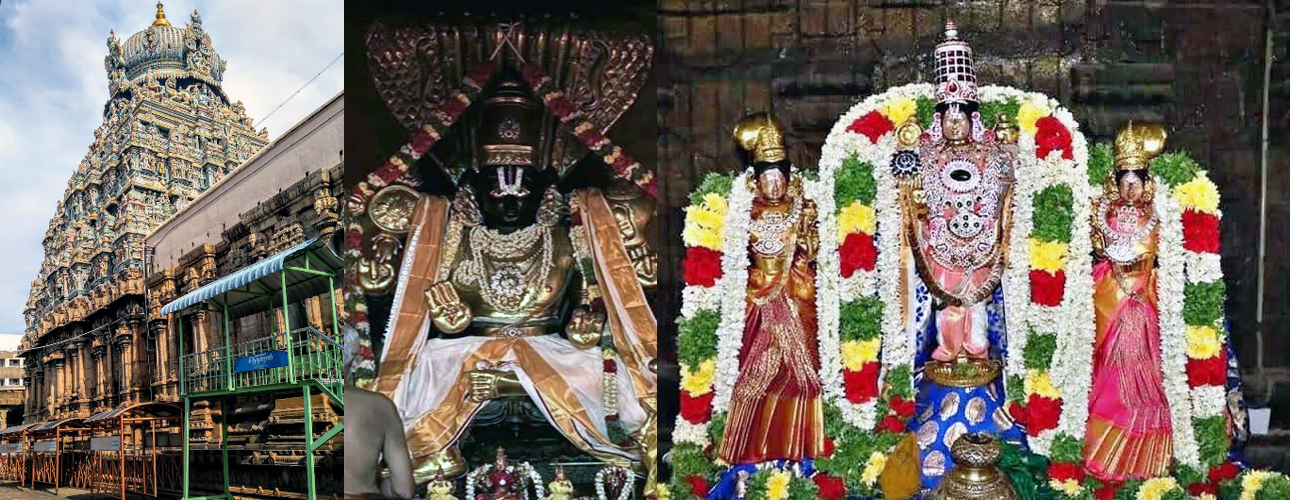
One of the temple’s most distinctive features is the depiction of Vishnu in three different sacred postures. On the first level, Koodal Azhagar is seated with Sri Devi and Bhu Devi. On the middle level, Surya Narayana Perumal is depicted standing, while on the upper level Sri Ranganatha is shown reclining on the serpent Anantha in the Anantha Sayana posture.
The approximately 125-foot-high Ashtanga Vimana above the sanctum is identified as a major architectural feature. The temple’s decorative works reportedly include stucco and wooden sculptures depicting episodes from the Ramayana, Mahabharata and Bhagavata Purana. The temple is said to have originated under the Pandya rulers and was subsequently expanded during the Vijayanagara and Madurai Nayak periods in the 16th century.
The shrine also has a strong association with Periyalwar and the Thiruppallandu tradition. According to the temple’s historical account, Periyalwar won a religious debate in Madurai and, overwhelmed by the beauty of the Lord, sang Thiruppallandu as a blessing. References to the temple are also said to appear in classical works including Silappathikaram, Paripadal, Kalithogai and Maduraikkanchi.
Another notable feature is its separate Navagraha shrine. While many Vishnu temples traditionally feature a shrine for Chakrathazhwar instead of Navagrahas, this temple is described as having a distinct Navagraha shrine. Devotees are also said to undertake milk-pot offerings to the goddess seeking marriage blessings, childbirth, educational progress and mental peace.
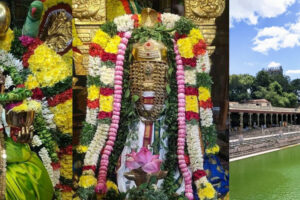
The temple celebrates the 14-day Vaikasi Brahmotsavam, with the chariot festival being particularly prominent. Float festivals at Hemapushkarani and Mariamman Teppakulam, along with the Margazhi Vaikuntha gateway opening, are also important observances. The supplied account additionally describes special Golden Sataari traditions associated with Vaikasi Pournami and Vaikuntha Ekadashi.
The temple is generally stated to remain open from 5.30 a.m. to noon and from 4 p.m. to 9 p.m., with timings subject to change on special days, and is located about one kilometre from Madurai railway station and Periyar bus stand.
Visitors are advised to follow the temple administration’s instructions regarding darshan timings, rituals and special-day arrangements.